Reflection
Why Creative Expression Matters for Mental Health
April 2026
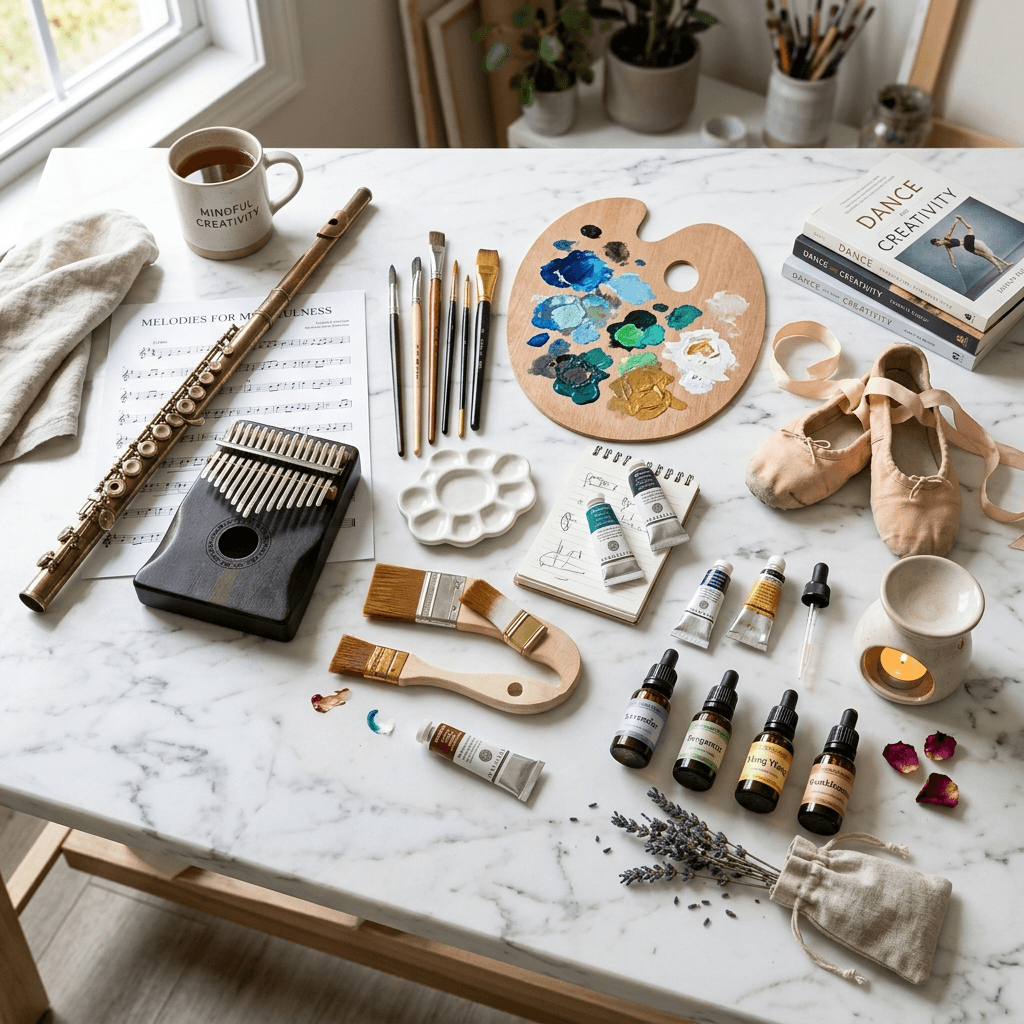
Art has long been recognized as a powerful vehicle for emotional release. Across cultures and centuries, human beings have turned to creative expression — painting, sculpting, singing, dancing — not merely as entertainment, but as a fundamental means of processing pain, grief, and joy.
The Science of Expression
Modern neuroscience has begun to quantify what healers have known for millennia. Engaging in creative activities reduces cortisol levels — the body's primary stress hormone — by an average of 75% within a single session. Music therapy has been shown to decrease anxiety in clinical settings by up to 65%, while visual art therapy demonstrates measurable improvements in mood regulation for individuals living with depression.
Beyond Talk Therapy
Traditional talk therapy requires verbal articulation of complex emotions — a barrier for many, especially children, the elderly, and those experiencing trauma. Creative expression offers an alternative language. A paintbrush can say what words cannot. A drum circle can release what silence holds captive. This is the foundational principle behind IHHAA's multisensory approach: meeting people where they are, through the sense that speaks loudest to them.
A Holistic Path Forward
At IHHAA, we believe that healing is not a destination but a practice. By integrating visual expression, sonic healing, movement, tactile engagement, aromatherapy, and culinary mindfulness into a unified framework, we create multiple gateways for emotional restoration. Each modality is designed to activate different neural pathways, ensuring that no individual is left without a means to connect with their inner landscape.